
If you’ve had a breast augmentation or reconstruction, how do you know when it’s time to replace your breast implants? According to the American Society of Plastic Surgeons (ASPS), patients can expect to replace their breast implants after 10 to 20 years. But there are several reasons they may need to be replaced sooner.
For example, implants can rupture through aging or weakening of the implant “shell.” Or intense pressure (such as a car accident) can cause a rupture. If you have saline implants, you’d quickly notice changes such as a “deflation” of the implant size. However, if you have silicone implants, you may not even be aware that a rupture has occurred.
Fortunately, with new AI-powered ultrasound technology, your plastic surgeon can help you determine if it’s time for a breast implant replacement. In Middle Tennessee, Dr. Stephen M. Davis at Green Hills Plastic Surgery is now utilizing this advanced technology to view the inside of patients’ breasts in real time to quickly diagnose the status of each implant.
Got questions? You can reach out to Dr. Davis at Green Hills Plastic Surgery for answers. An ultrasound exam can determine the status of your breast implant in as little as 15 to 30 minutes. Here’s how this new ultrasound technology works.
How New Ultrasound Technology Works
Ultrasound technology is commonly used by diagnostic clinics to take pictures inside the breast area, usually to take a closer look at an area that showed up as “unclear” or “abnormal” in a mammogram. This technology allows medical providers to focus on a small area of the breast more closely and in more detail, compared to a mammogram.
This breast ultrasound technology has now been combined with AI to help plastic surgeons more quickly recognize key breast tissue layers, including breast implants, for fast and effective ultrasound-guided exams and procedures.
Signs It May Be Time for a Breast Implant Replacement
According to the ASPS, here are a few signs that it may be time for a breast implant replacement. Keep in mind that if you have silicone implants, you may not even be aware that there is a problem with your implant.
Deflation or Other Signs of an Implant Rupture
As we noted earlier, a saline implant rupture can quickly cause breast deflation, making it fairly easy to determine if there’s a problem. It’s important to note that the saline inside the implant is the same as an IV solution and is simply absorbed by the body. However, silicone implants cannot be quickly diagnosed without a breast ultrasound or an MRI, because the silicone gel inside the implant leaks out very slowly.
The Implant Has Bottomed Out
The ASPS defines “bottoming out” as a condition where the skin and tissue cannot adequately support the breast implant, causing the implant to gradually fall below the breast crease, or “bottom out.” This is different from some natural sagging that can occur over a long period of time. Bottomed-out implants can cause nipples to move upward as the implants fall lower, and patients may be able to feel and see the outline of the bottomed-out implant.
Breast Implant Pain or Discomfort
There are a number of issues that can develop over time that can cause implant issues that can lead to discomfort, such as capsular contracture, damaged lymph nodes, a developing seroma (fluid pocket), or pinched nerves. Even if you are not experiencing any serious pain, any discomfort that is disrupting your daily life is a sign that it’s probably time to consult with a plastic surgeon like Dr. Davis, who can use an ultrasound exam to diagnose and treat the issue.
You’re Not Happy With Your Breast Size
While you may have been initially happy with the results of your breast augmentation, after a period of time, you may now be wishing you had opted for a larger or a smaller implant. Dr. Davis at Green Hills Plastic Surgery will likely advise you to wait at least a year after your initial augmentation before making a change. This gives your body more time to completely heal, and gives your implants time to settle into their final position before you make this major decision.
Start With a Consultation With Your Plastic Surgeon
Even if you aren’t experiencing any obvious “signs” of a problem with your breast implants, a breast ultrasound can help you determine when it’s time to consider having a replacement.
A consultation with your plastic surgeon is a good first step. At Green Hills Plastic Surgery, Dr. Davis can schedule an ultrasound that can uncover any issues with your implants in as little as 15 to 30 minutes. Contact Dr. Davis today for a consultation and to learn more about this new AI-powered ultrasound technology.
This article and all blogs on our website are educational and not medical or legal advice. An in-person consultation is the best way to determine which treatment, device, or timing is right for you.
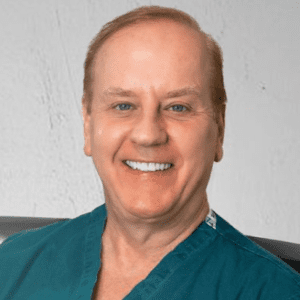
Author: Dr. Stephen M. Davis
Board-certified plastic surgeon Dr. Stephen M. Davis and his experienced team are committed to total patient satisfaction and excellent results. Green Hills Plastic Surgery first opened its doors in Nashville, TN in 1998 and continues to provide patients with time-honored plastic surgery procedures at TriStar Centennial Medical Center.