Considering getting a neck lift, a face lift, or neck liposuction? In order to get the best results from this type of procedure, it’s important to understand that the anatomy involved goes beyond tightening superficial skin tissues. When it comes to any procedure involving the face, neck, and décolletage, it’s important to think about all the layers under the skin. Dr. Stephen M. Davis at Green Hills Plastic Surgery explains in this Q&A article.
Q: Can you provide a high-level overview of how you approach a neck lift?
A: One of the basic concepts that I always talk to patients about is that you have to think in layers. Always think in layers.
The first layer is the skin, the next layer is the fat, and then the next layer redraws over the newly positioned muscles. And then the next layer below that is fat and things like nerves, blood vessels, lymph nodes, and saliva glands, etc.
The easy way to think about this is that it’s equivalent to making your bed. If the sheet and the blanket on the bed are kind of wrinkled and irregular, if you simply pull the comforter up without pulling up the sheet and without pulling up the blanket, the comforter may appear smooth. But because things underneath it aren’t smoothed, tightened, and without wrinkles, then that will eventually show.
So the same thing is true with the neck. You can certainly release the skin so that you can get the skin moving and pull it tight: tighten it just like you could tighten a comforter. But you need to deal with the tissues that are underneath.
There’s a muscle underneath called the platysma muscle. The muscle goes from the collar bone, goes up the neck, over the jaw onto the face, and it becomes something called SMAS (Superficial Musculo-Aponeurotic System), which we utilize in facelifts.
Now, in the center portion of the neck, in the chin area, that muscle may or may not come together. So if that muscle does not come together, then you’ll see people, and elderly people, who will have what is referred to as the “turkey neck,” where you’ll see a band on one side that hangs down, and potentially a band that hangs down the other side. And so, as a result, those bands, as part of this thinking in layers, need to be addressed.
So one of the things I do is look at that. And you need to make these decisions in advance and understand what the problem is. So again, if you go back and think in layers, then you can manage the fat by selectively removing it. You can manage those bands by taking those muscles and literally tightening them, putting a pleat in them. And there are lots of ways to do that.
One of the things that I like to do is what’s called a Corset platysmaplasty, which changes the angle of the neck. It will change the angle from an obtuse angle, which goes from the chin straight down to the top of the breast bone, so that you have a very nice 70-to-80-to-90 degree angle from the chin to the neck and then straight down. So this “youthifies” the neck. The next layer is the skin.
Now, there are other things that can be done to the muscles, which I also do, that can be partially divided or completely divided, depending on how you need that muscle to lie. The neck has two pieces. There’s the horizontal piece, which goes back to basically what you would consider your throat, where you swallow. And there’s a vertical piece that goes down to your collarbone and to your breastbone. And so that angle is the angle that we’ll talk about with being acute or obtuse.
And so a youthful neck is an acute neck. It has an acute angle. We call it the Cervicomental angle. The cervical is the spine. The mentum is the chin. And so you want a nice acute angle, and this youthifies the neck. And then, once the muscle is correct at a deep level, you have now pulled up/tightened the sheet and blanket on the bed and tightened the deep layers nicely. Now you can take the neck skin, pull and tighten that, and redrape that over what you’ve done underneath, and then you get a great result.
Now, in a lot of cases, what you’ll find is that it’s not only the neck, but it’s also an extension of the face. It’s the face that also needs to be addressed. So in my view, facelifts are bi-directional. The face goes up with a lift, but the neck goes back. So if you pull the face back, you get that Joan Rivers look, you know, the face-sliding-down, or the head-out-the-window kind of look. It’s where everything is pulled, tightened, distorted, and stretched. And the corners of the mouth start to get longer and wider, and it just looks overdone; it’s really a poor-quality facelift.
So in many cases, if you address the neck alone, when you take that skin and bring it posteriorly behind the ear, you’ll find that you have a bunching of extra skin there in front of the ear. And that’s because the face is sliding down. So for many cases, you really need to do the neck and face in concert, so that the entire “cosmetic unit” changes uniformly.
When I refer to the cosmetic unit, I mean the face, neck, and décolleté as one unit. So when you talk to people, you’re looking at their face, but you’re also looking at their neck. And whether you’re seeing it directly or indirectly, that’s part of the face, and that makes an aesthetic unit.
In many cases, you can address the neck, but you have the face that’s sliding down. The jowls are now hanging over the mandible, and that is a telltale aging sign. You have deep folds that go from the mouth to the jaw line. The cheek pad, which was higher on the face, has moved down the face, giving a squarer face and a less youthful appearance. That’s because the volume has gone down, and our face is sliding off our skull. Gravity works! When we go into space, plastic surgery goes away.
Q: What is neck liposuction? How is it different from a neck lift?
A: Well, if you go back and think in layers again, the skin on the outside is what we call cover, and then underneath that is fat. That fat can be between the skin and the muscle. It can be between the skin, the muscle, and below or between the edges of the muscle. Say the skin quality is very good — nice elasticity, good tone, nice and strong — but you’ve got that pooch and that fullness in the region.
Then, if the jawline is good, if you don’t have a lot of jowling, if you don’t have a lot of crepey, sun-damaged, irregular, aged thin skin, then you can selectively go in and remove that fat and tighten that area. And because of the quality of the skin, the skin is going to shrink and re-adapt itself to what’s happened underneath. That’s pretty much how liposuction works in the neck and in other parts of the body.
So, regardless of where you are on the body, the way to think about liposuction is this: If you had a block of Jell-O or cheese, and you took a dowel or a pencil, pick your instrument. And if you started pushing and making tunnels through the Jell-O, then eventually, because you’re making these tunnels, you’re going to debulk the Jell-O. You’re going to be pulling lots of volume out of that Jell-O.
So you’ve converted that Jell-O from a block of Jell-O to a block of Swiss cheese. And as a result of that debulking, with the liposuction cannula, where you’re pulling out these cores, then these tunnels now collapse, and they go from tunnels to slits. And as a result of that, that’s how you lose volume. So the next thing that happens — thinking in layers again and using the bed example again — you now have the ability of the comforter, which is sitting on top of that, to tighten and shrink and accommodate what’s happening underneath.
There is another procedure where you can do a lipectomy. Ectomy means to remove something surgically. Therefore, this is surgical fat removal. So I make an incision under the chin, hidden in the crease line, and I go in, and I separate the skin from the fat. I can surgically remove all the fat.
This allows me to see the muscle in the layer below that. And so if the muscle is weak, if the muscle is starting to sag, droop, and hang, if the muscle is divided, then I’m looking at it. So I can take that muscle, and I can tighten it together, and I can surgically sew the edges together, just like you’d put a pleat in clothing or a dart in material. And now I can tighten that submental space, so that when that skin shrinks and tightens, it’s tightening into the layers underneath that are smooth and flat.
Q: There’s a popular non-surgical procedure called a “Nefertiti lift.” Can you explain how this works?
A: Nefertiti was an Egyptian queen. If you look at the sculptures, drawings, and images of her, she’s got a very acute neck. In other words, the area under the chin goes back nice and flat. From the horizontal component under the chin, the vertical component comes down nicely. So she’s got an acute angle of her neck, versus an obtuse angle, where it is one continuous line from the chin to the breast bone.
So the concept behind the Nefertiti lift is that the muscle underneath is somewhat weakened and not tight, and because of that, it’s bulging forward and down. But you’ve got good quality skin, nice elasticity, nice tone, and good, thick, strong dermis.
So, going back to the bed example, you’ve got a really good, healthy comforter. You’ve got a nice, solid comforter, but the sheets underneath are wrinkled and relaxed a little bit. This is where you use BOTOX®, because BOTOX will selectively paralyze the muscle, and by paralyzing the muscle, it becomes tight. And so now you’re tightening up the blanket underneath, using Botox to change the muscle layer so the skin can adapt itself to what’s happening underneath.
But it’s a selective patient who can do that. You can’t have the average person who may be around 5’5”, 285 pounds, and comes in with a big, full, bulging neck and lots of subcutaneous fat, and expect them to get a great look from BOTOX.
Q: Can a neck lift be combined with a facelift? When should patients consider getting both?
A: Well, it’s gravity! When they look in the mirror and see jowling, and they see deep folds, and their neck is starting to relax, hang, and fall, that’s when you should consider getting both.
And typically, when you address these issues sooner, procedures do well and last longer because you’re dealing with better quality material. It’s like trying to pull a nice, brand-new comforter up and get it to stay in position, versus pulling up a 30-year-old comforter that’s stretched, thinned, and worn, and the fibres have no intrinsic strength. It won’t redraw well, and if it does, it’s not going to maintain its position.
Q: What type of non-surgical options do you offer at Green Hills Plastic Surgery for improving the appearance of the neck and jawline?
A: Well, again, it’s all in the layers. If the skin quality is good, but it’s somewhat aged, and you have sun damage, or elasticity or appearance issues, then chemical peels can work very nicely at improving the quality of the skin and the visual appearance of the skin. And you can do chemical peels of varying degrees of aggressiveness. We have chemical peels that will literally go into the leather portion of the skin, the dermis of the skin. We have chemical peels that will work solely on the surface. Sometimes you can do combinations of those.
Another procedure that works pretty well is microneedling, where you take very fine needles and make thousands of little microscopic holes all throughout the skin. It’s kind of like aerating your lawn. And then the body heals those microscopic holes with collagen. So you’re kind of adding a little bit of density and collagen to the skin to try and make it a little thicker, better, nicer, and stronger.
Many times, what I do is microneedling in association with a very aggressive chemical peel, which basically addresses all the layers of the skin. But you have to have a skin that can: A) tolerate it and B) be prepared to tolerate it.
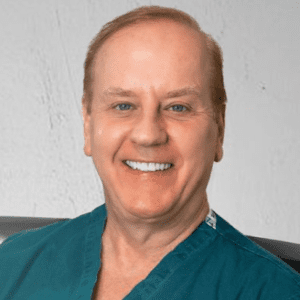
Author: Dr. Stephen M. Davis
Board-certified plastic surgeon Dr. Stephen M. Davis and his experienced team are committed to total patient satisfaction and excellent results. Green Hills Plastic Surgery first opened its doors in Nashville, TN in 1998 and continues to provide patients with time-honored plastic surgery procedures at TriStar Centennial Medical Center.